Live without Regret

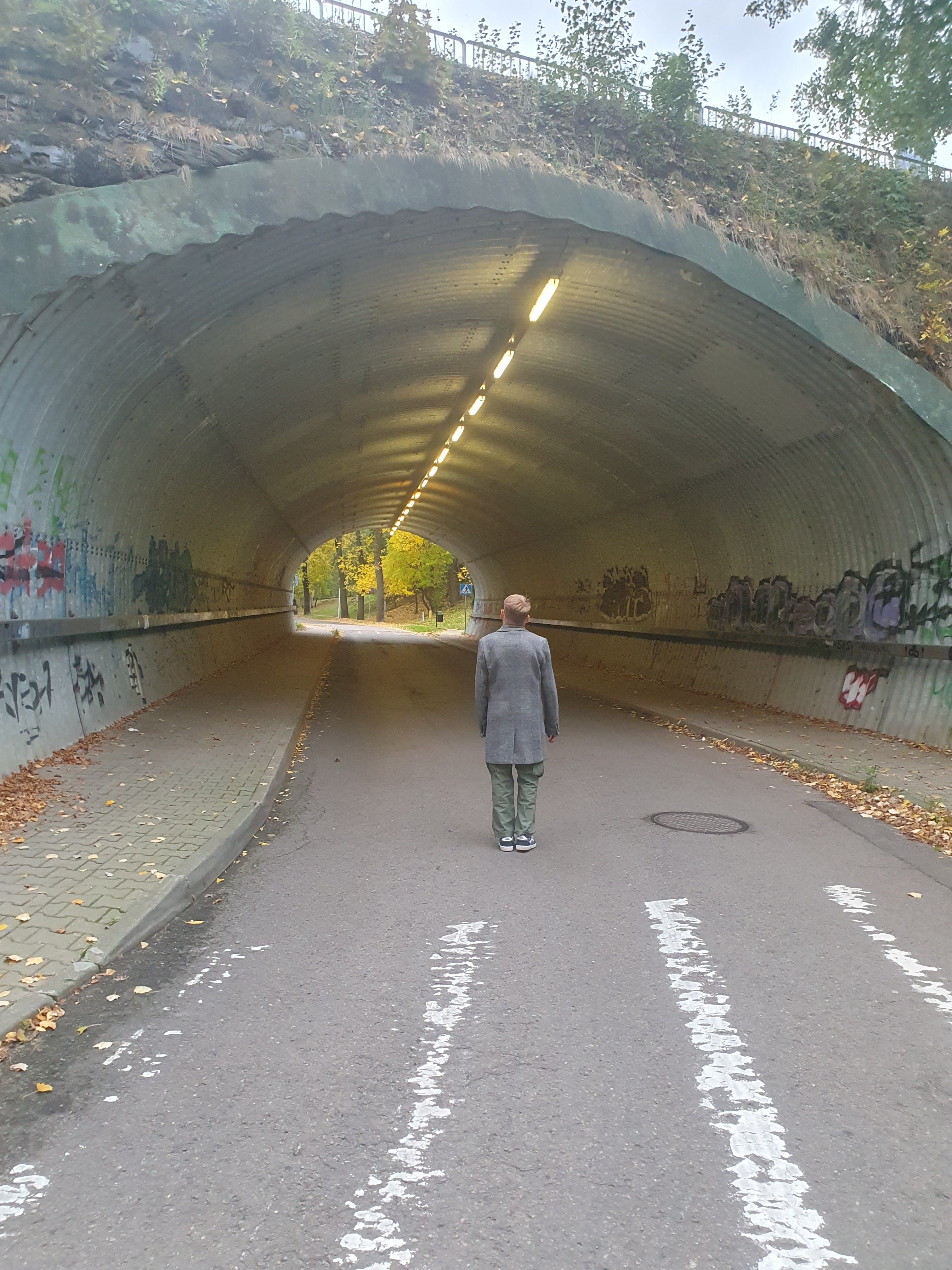
Regret is like a tunnel. It forces upon you seeing only one possible conclusion. Get out of the tunnel. Gain a broader perspective.
You may think that learning to live without regret is a complicated process – that it requires a fifty page article or a book. After all, so many people struggle with decisions nowadays (“FOMO”, anyone?). And when they finally do decide it only takes about half an hour for them to start second guessing themselves.
Life in the 21st century is definitely not making things easy. We are bombarded with choices, constantly. Just think of the apps on your phone, the millions of content creators on the internet – everyone is screaming to compete for your attention. But even with the odds stacked against you, anybody can free themselves from the clutches of regret. All it requires is some critical thinking.
The perspective I am about to share may take a while to properly internalise, so I encourage you to come back to this post again at a later date. That being said, the theory behind my mindset is simple. It is only your mind (and perhaps society) that fools you into believing something cannot be done.
Ditch those signals and free yourself from the chains of “I wish I had…”- statements in the back of your head.
Easy solutions only sound hard
For whoever is still sceptical, consider a parallel example: how many people tell themselves every day “I need to lose weight”? Meanwhile everybody knows the solution: go to the gym. Sure, you may not reach your ideal weight overnight. But if you put your mind to it, with enough determination and patience you will get there.
Let us be real here, most people are just lazy. But given you are reading this article, I can assume you are ready to give it a go.
Understanding regret
“The more you understand what a bad decision taught you, the less regret you feel.”
Most people will describe the feeling of regret more or less as follows:
“I think of a situation in the past, and conclude that I should have acted differently.”
What is crucial here is that you changed your mind. Whether that pertains to a previous decision that you made, something you said or did. In retrospect you would have acted differently.
I never change my mind about a decision I made in the past. Ergo, regret is alien to me. In this post I will explain how I do that.
Because I am no fan of too much theoretical babbling, I want to jump straight into an example. And what better example than multiple “wasted” years of life.
Running into walls
In 2015 I was a freshly baked “young adult” coming off high school. I applied for university without really putting much thought into it. I chose a degree in architecture, mostly because I spent half my classes drawing instead of listening to my teacher. And no – I was not in art class. I just enjoyed filling my notebooks with whatever my imagination presented to me – usually swords, trees and fire (strange combination, I know).
I commenced university in a, let’s say, less than ideal way, namely by having a run-in with a self-absorbed architect. He was supervising my project, and at one point I politely told him to f*ck off, because he thought being more educated gave him the right to interrupt me constantly. But aside from that one incident I thoroughly enjoyed the studies. Unfortunately, they only lasted around two months; I was forced to quit because of my poor health.
“It happens” is what I thought.
I switched to another university… and met a similar fate. A situation that would repeat itself a few more times. One day I was visiting my high school friend who said:
“Some people collect stamps, others trading cards – I collect unfinished studies.”
I felt that one.
In total I tried four different studies, and failed all of them. The longest I managed before falling ill was 5 months. I may sound like a complete fool for trying the same thing over and over, but that would be 20/20 hindsight.
Here is a high-speed turbo jet engine summary of those years:
Studies #1 were too demanding physically. Studies #2, Social Work, less so, but much like before illness soon overtook me again. “Alas, maybe if I go back to live with my parents I will have fewer daily chores and things will work out.”
I switched to a college in my home city (#3) – nope, I dropped out again. Eventually I even moved to Belgium for Applied Linguistics (#4), where I sort of succeeded.
I was at the precipice of completing the studies, when an unresolved childhood trauma put everything to a halt one more time. I had in fact started therapy for PTSD two years prior, but evidently I had not progressed enough yet to prevent things from going south. Eventually, after a comedy of errors, I stranded in Poland, where I finally, after 8 years, got my degree.
All in all, I had to run into a wall four times before I found myself. As much as it sucked to constantly face failure and disappointment, I must admit that each of these failures taught me something critical that I otherwise never would have learned.
Hollow years and their takeaways
The first failed studies taught me that I simply cannot ignore my health. The second made me awfully aware of my past. The third one I can summarise with my teacher’s parting words:
“Robert, you already inspire by living.”
He made me realise that as much as the past was still haunting me then, in the future those same experiences would open pathways for me to reach otherwise unreachable people. It was the start of choosing a different path in life.
The last unsuccessful attempt at studying showed me the true face of university politics. Nowadays my Indian friend and I jokingly refer to it as ‘The theory of “get out and run for your life”’ (More about this in a future longform post).
Considering all of the above, I prefer to call this period of my life hollow years instead of “wasted years”. As difficult and depression inducing as those experiences were, by no means were they a complete waste of my time and effort, for each of them taught me a valuable life lesson.
And if all this still sounds like me dancing around like a clown in rose-tinted glasses sweet talking and finding positives where there are none, here is a completely different example which demonstrates that some cursed places still can be valuable:
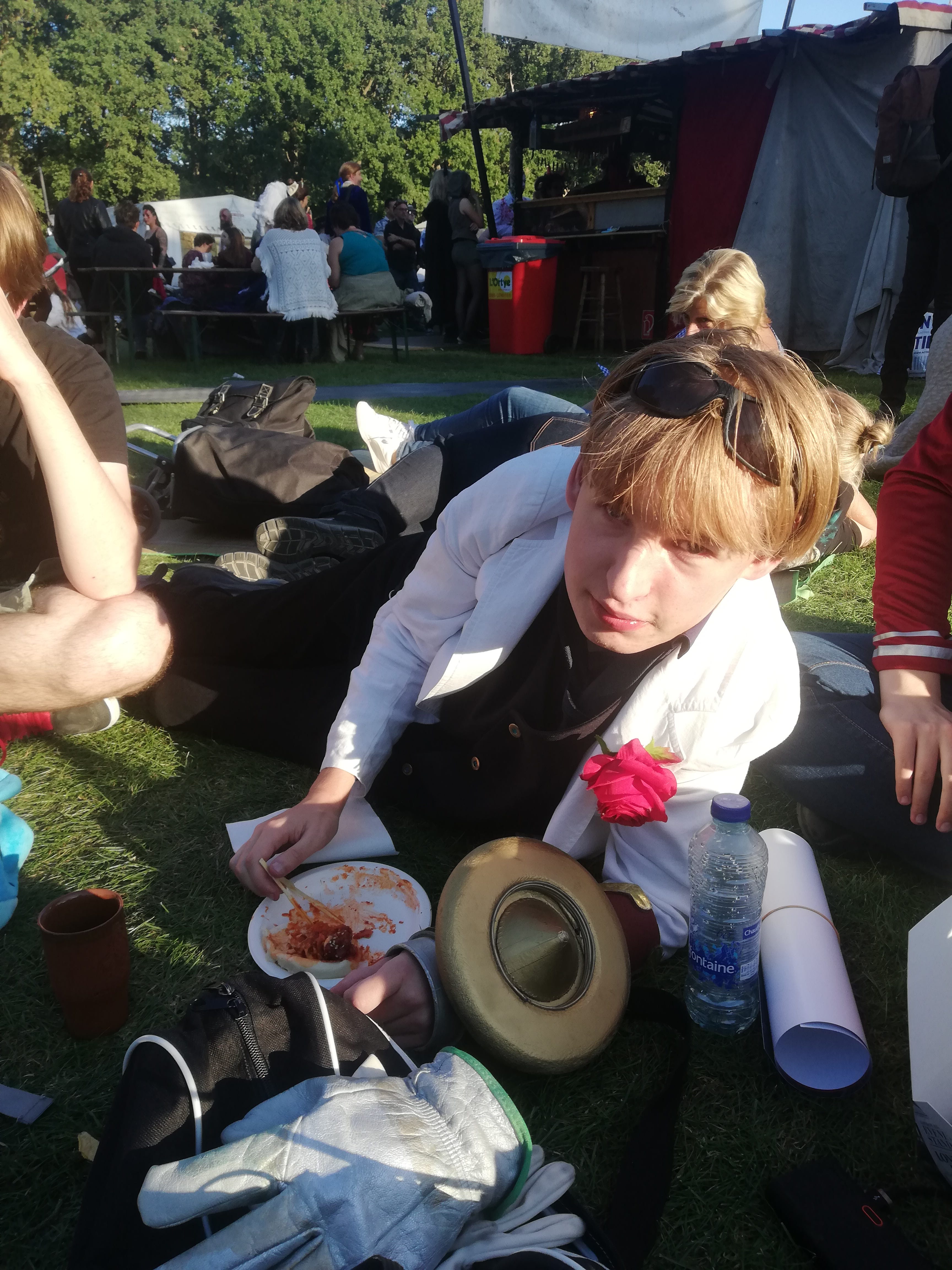
Two years after dropping out of Architecture I showed up at the university workshop to work on a mechanical arm (?) for my cosplay. By the way, please don’t tell them that I was not a student there at the time. Thanks.
“Once the stone you’re crawling under is lifted off your shoulder,
Once the cloud that’s raining over your head, disappears,
The noise that you’ll hear,
Is the crashing down of hollow years.”
~Dream Theater – Hollow Years
The bottom line is to focus on what you learnt from an experience, rather than on what you lost. Life is not a video game. There exists no such thing as the “most efficient way”. It is about what you make of the way that you chose.
I can already hear voices saying:
“But how does all this time that you spent without factually achieving anything weigh up to one or two life lessons?”
Hold your horses, I will get to that in a moment.
Retrospective thoughts
Sometimes, positive thinking only gets us so far. If I played the devil’s advocate here, I would say: “That example you gave stretches eight years – of course you will find something positive in that long of a period.”
Let’s consider single instances, then. I am talking about those times where we were faced with a sudden decision. They often leads us to thinking: “If I knew x or y, I would have…”
Exactly… if you knew.
Newsflash: you did not know.
Imagine how idiotic somebody would sound if they said to you:
“Back in January you truly made a bad decision for us to go on a holiday to Georgia this June! We are halfway through our stay and all we have had is rain.”
As if you could have predicted months ago whether it was going to rain in a foreign country or not. (Yes Americans, I am referring to the country Georgia, not the state. Heh.)
The most you could have done is prepare some plan B beforehand.
The takeaway: what you know now, you may not have known then. Do not conflate those two states. Instead, educate yourself and take sufficient time before making important decisions. If you changed your mind about a decision you made in the past, let that simply be a lesson for you to approach a similar future situation differently.
This is common advice when it comes to big life decisions: marriage, buying a house, moving to a foreign country etc.
Yet it seems that people put their brain on autopilot for a lot of semi-important decisions. I am not saying to put an insane amount of time and energy into every decision you make – that would be straight up idiocy. Simply be aware of the impact of your decisions and allocate sufficient resources.
Getting sufficiently hit in the face
At times, we do not learn from our mistakes. Let me compare two instances.
One day I was strolling through the park with my acquaintance from Azerbaijan. Suddenly three guys walk up to me and ask me for a selfie. I was slightly taken aback at their sudden request. Apparently they mistook me for some YouTuber.
We laughed. I jokingly said:
“Well I’m not the guy you are looking for, but we can still take a picture if you want.”
They took the picture, and I asked them if they can send it to me. They asked for my Facebook, which I do not use, so I dropped the idea and wished them a good day.
Five minutes later I realise: “Damn I am stupid, I could have just taken a picture myself.” Oh well.
Fast forward two months and I am walking back home. On the way back I run into a guy filming his friend who is jumping (dancing?) to some rap music inside a tunnel (the one from the banner image). “They must be recording a music video” – I thought to myself, so I stop in my tracks and wait for them to finish. After about two minutes the music stops. They turn to me to thank me for my patience. We exchange a quick chat, and as I walk away the guy even records me showing them a peace sign.
I get back home and I realise that I could have asked them for contact information. Well, shit.
To this day I wonder if I am somewhere in a music clip I do not know of.
As demonstrated by the similarity of both happenings, the first experience did not succeed in teaching me to be forward and assertive enough. Only the second instance did. In other words: I “regretted” not asking the rapper for his contact info more than I did not getting the picture from the park guys.
Now imagine what would have happened had I met the rapper before running into the park guys. I probably would think twice before letting the park guys off the hook.
Consequently, getting hit in the face sufficiently prompts learning. Sometimes a light slap is not enough. You could say that in this example the interaction with the park guys was not sufficiently “regrettable”, hence I did not learn from it.
The takeaway: sometimes a situation which we regret deeply is the only way for us to learn.
Two simple questions and a rule to life
Next time you regret a decision, ask yourself the following question:
- What did I learn from that experience?
(Life lessons or experiences that will come handy in the future)
If you are about to make a decision in the near future, ask yourself:
- What can I do in order to best guarantee I make the correct decision?
(Educate yourself, do research, ask others for advice)
And lastly: despite the above you still might end up regretting having done something. Simply accept that it probably was the only way for you to learn. Unlike before, you probably will not repeat the same mistake again.
I will conclude with a quote from my Indonesian friend:
“The best psychologist is life.”
Despite his 30 years of experience as a therapist, some clients still refuse to follow his advice. He accepts that apparently the only way for them to learn – to understand that for their situation to improve they first need to change themselves – is when life smacks them in the face hard enough.
Good advice may help you find your way out of the tunnel quicker. But at the end of the day, every tunnel has an exit; you will get there eventually, even without help. Just understand that, if you insist on standing your ground, you may wear yourself out before you reach the exit.